

It's 10 p.m. You've brushed your teeth, set your alarm, and you're standing in the bathroom holding your progesterone cream, wondering: should I have done this this morning?
It's one of the most common questions women ask after their first bottle arrives. The good news: there's no single right answer, but there is a right answer for you.
When is the best time to apply progesterone cream?
Many women apply progesterone cream in the evening, because progesterone has a naturally calming effect and fits easily into a bedtime routine. Others split it between morning and night. The most important thing is to apply it at the same time each day and follow the schedule your healthcare provider recommends.
Why so many women choose night
Progesterone does more than balance estrogen. Your body converts some of it into a compound called allopregnanolone, which acts on the same calming receptors in the brain that help you wind down. That's why progesterone is often described as a "relaxing" hormone, and why prescription oral progesterone is usually taken at bedtime.
If this sounds familiar, it's not a coincidence: many women first notice their progesterone dropping in perimenopause as restless nights, waking at 3 a.m., or feeling wired but tired. You're not imagining this. Progesterone is one of the first hormones to decline, often years before estrogen does.
Applying your cream at night lines it up with the part of the day when you'd most like that calm.
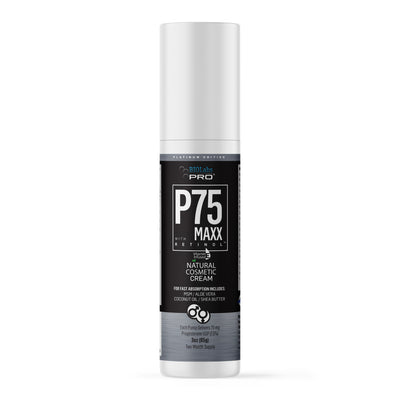
There's also a practical reason. If you use P75 MAXX, which contains retinol, night is the better choice. Retinol makes skin more sensitive to sunlight, so evening use is the standard advice.
When morning (or twice a day) makes sense
Night isn't the only option. Some women prefer to:
- Apply in the morning if the evening routine is rushed or easy to forget
- Split the amount between morning and night for a steadier feel through the day
- Apply right after a shower, whenever that happens, so it becomes automatic
A common misunderstanding is that timing is everything. In reality, consistency matters more than the hour. Applying at roughly the same time every day is what keeps your routine steady.
Where to apply progesterone cream
Apply it to areas where the skin is thin and clean, and rotate between them so one spot doesn't get saturated:
- Inner arms and wrists
- Inner thighs
- Abdomen
- Upper chest
- Neck
Rub it in until absorbed, wash your hands, and avoid skin-to-skin contact with others until it has soaked in. For more detail, see where to apply progesterone.

Should you use progesterone cream every day?
It depends on your stage of life:
- Still having periods? Many women use progesterone cream in the second half of their cycle, often from about day 12 to day 26, and take a break during their period.
- Postmenopausal? Many women use it daily or follow a pattern like 25 days on, 5 days off.
Your healthcare provider can help you choose the schedule that fits you. We cover this in more depth in Is It OK to Use Progesterone Cream Every Day?
This is where testing can provide clarity. A saliva hormone test that measures progesterone and estradiol, and the ratio between them, can show whether your levels are where you'd expect, rather than leaving you to guess from sleep and mood alone. See our BIOLabs PRO® hormone test kits.
Which BIOLabs PRO progesterone cream to choose

All of them are made in the USA in a Kosher, FDA-inspected facility, in a skin-conditioning base of vitamin E, aloe vera and allantoin.
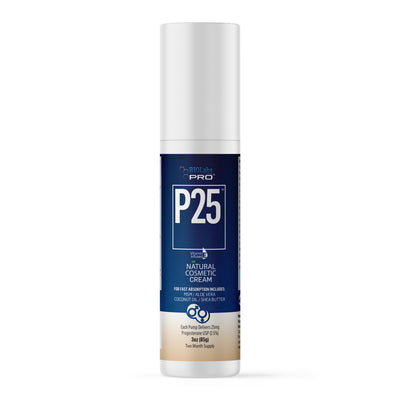
- P25 Cream: 25 mg progesterone per pump. A gentle place to start.
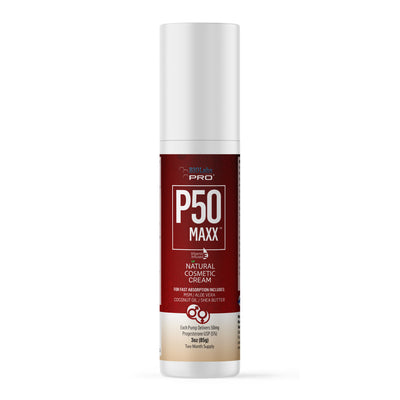
- P50 MAXX: 50 mg progesterone per pump. A step up for women who want more.
- P75 MAXX: 75 mg progesterone per pump, with retinol. Best used at night.
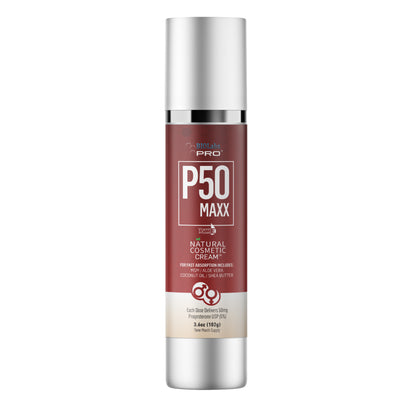
- 3.6 oz three-month-supply bottles: P50 MAXX 3.6 oz (12.5 mg progesterone per pump) and P75 MAXX 3.6 oz (18.75 mg per pump, with retinol). Their precision pumps give a smaller amount per pump, so you can fine-tune how much you use.
Compare them all in our progesterone cream collection.
The change many women describe is a simple one: going from wondering whether they're doing it right to having a routine they don't think about anymore.
Frequently Asked Questions
Does progesterone cream make you sleepy?
Some women find it relaxing, which is why many apply it at night. Effects vary from person to person, so notice how you feel during the first few weeks.
Can I apply progesterone cream twice a day?
Yes, many women split their amount between morning and evening. Divide the amount your provider recommends rather than adding extra.
What happens if I forget to apply it?
Apply it when you remember, unless it's almost time for your next application. Don't double up.
Should I apply progesterone cream to the same spot every time?
No. Rotating between the arms, thighs, abdomen and chest helps your skin absorb it well.
Finding your rhythm
If you've been experiencing these symptoms, understanding your hormone patterns can be a helpful next step. And once you know what you're working with, choosing a time to apply your cream is the easy part: pick the one you'll actually stick to.
Ready to build your routine?
Explore our progesterone creams, with clear mg-per-pump labeling in three strengths.
These statements have not been evaluated by the FDA. BIOLabs PRO cosmetic creams are not intended to diagnose, treat, cure or prevent any disease. Talk with your healthcare provider before using hormone-based products.
Sources
Author Bio
Elizabeth Lopez has been a dedicated member of the BIOLabs PRO team since 2016, specializing in research and educational content focused on bioidentical hormones and holistic wellness. With nearly a decade of hands-on experience within the bioidentical hormone industry, Elizabeth stays current on emerging research, regulatory updates, formulation advancements, and patient education trends.
Working closely with formulators, pharmacists, and hormone-focused practitioners, she translates complex hormone science into clear, practical guidance for both providers and individuals seeking balanced wellness solutions. Her writing reflects BIOLabs PRO’s commitment to responsible education, ingredient transparency, and compliance-driven communication.
Elizabeth is passionate about empowering readers with research-informed insights that support informed conversations between patients and their healthcare providers.